A 2024 book, Queer Anatomies, explores the queer gaze of anatomical drawings from the 18th and 19th centuries.
Sexual body parts and same-sex desire were unmentionables in 18th- and 19th-century Europe, debarred from polite conversation and printed discourse. Yet one scientific discipline, anatomy, had license to represent the intimate details of the human body—rectum and genitalia included. Performed by the figure of the dissected or flayed cadaver, the anatomical division of the body into bounded regions and systems could be soberly technical. But just as often monstrous, flirtatious, theatrical, beautiful. And sensual. Anatomical images gave off heat, an erotic frisson which pleasured the men who produced and gazed upon and collected anatomical atlases and prints.
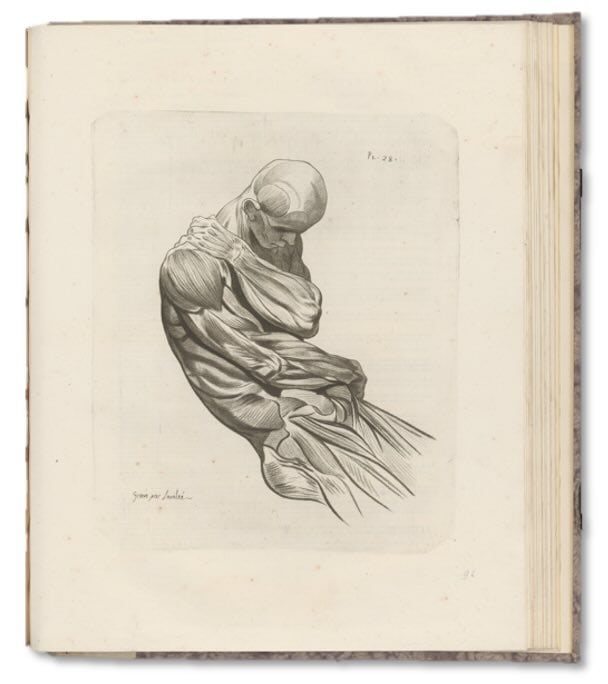
Jacques Gamelin, Nouveau recueil d’ostéologie et de myologie, dessiné‚ d’après nature… (Toulouse, 1779), pl. 28. Copperplate soft-ground etching: Jacques Lavalée. 54 x 40 cm. Waller Collection, Uppsala University Libraries. (Public domain. Photo by author.)
Michael Sappol, with Evi Numen, NOTCHES


… reposted this!